Chapter One: The Meridian
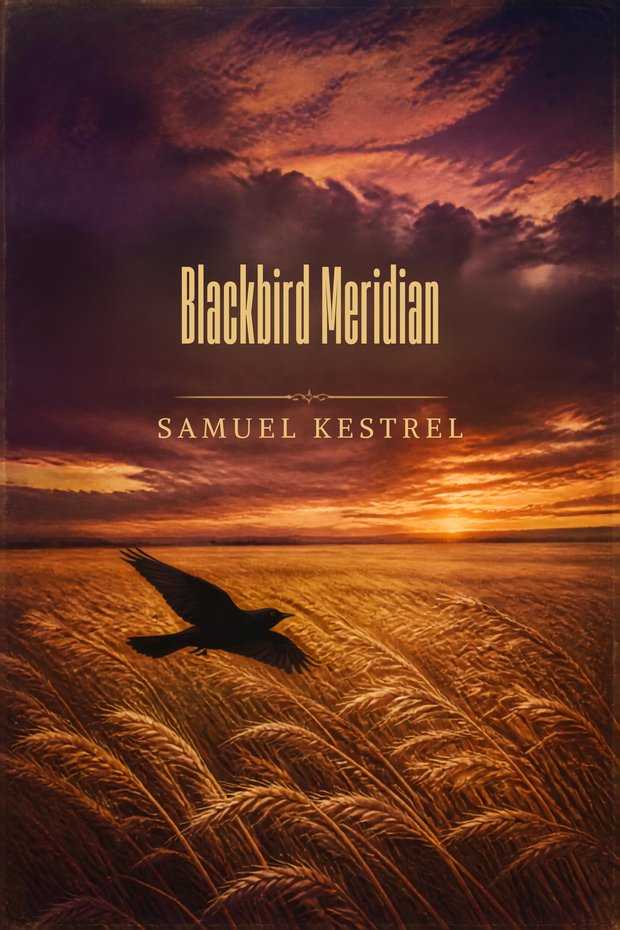
The river took its time giving her back, the way it took its time with everything, and by the hour the Corinth Landing volunteer company dragged the grapple hooks up through the snag at Blackbird Meridian, the cane along both banks had gone the color of a bruise healing. Wade Pruitt stood on the gravel with his hat off, which was the only ceremony the sheriff ever allowed himself, and watched the tarp settle over something that had been a girl three weeks before. Upriver a quarter mile, where the old rail trestle had folded into the water forty years back and never been pulled out, a first few blackbirds were already filtering down into the dead cane to roost, murmuring to each other the way they did every evening at that hour, as if the finding of a body were a thing the river announced to its own congregation before it told the town.
Dovey Calloway heard about it before the deputies had finished writing their names on the clipboard, because Dovey Calloway heard about everything that came up out of that water inside the hour, had for sixty-some years, ever since her mother had sat her down at the kitchen table with a ledger bound in waxed cloth and taught her what entries looked like. She did not go down to the bank. She had long since stopped needing to see the thing itself to know its shape. She sat on her porch with her hands folded over her apron and she said the girl's name before anyone brought it to her, said it low, to the yard, to the chinaberry tree, to whatever was listening that wasn't a person, and what she said was not grief exactly, not yet, but something older and flatter that grief would have to climb up out of later.
It was Wren. Seventeen years old, Dovey's sister's great-granddaughter, gone three weeks from a town where a girl gone three weeks was supposed to mean a bus ticket to Valdosta and a boy nobody approved of, not this, not the Meridian, not the same bend where the water folded back on itself beneath the collapsed iron of the Corinth Spur and did not let go of what it caught. The coroner from the county seat, a tired man named Ulmer who drove the forty minutes out only when Corinth Landing made him, would write accidental drowning on the certificate before he had so much as turned the body over, because that was what the certificate always said for the Meridian, had said for longer than Ulmer himself had been licensed to write anything.
Thirty years before, almost to the week, it had said the same thing for a man named Eli Kestrel, and the son of that man was at that hour three hundred and ten miles north in a one-bedroom apartment above a shuttered hardware store, packing a duffel bag before he had consciously decided to go anywhere, because some decisions get made by the hands before the mind signs off on them. Amos Kestrel had seen the item online, four lines in the county paper's digital edition, BODY RECOVERED FROM OCAWATCHEE RIVER NEAR CORINTH LANDING, and he had read those four lines perhaps forty times in the space of an hour, the way a man will read a thing hoping the next pass will change it, and on the forty-first reading he had understood that he was already moving, had been moving since the second line, and that the moving was thirty years overdue.
He had not been back since the funeral, if it could be called that, a service conducted in twenty minutes by a preacher who would not meet his mother's eyes, in a church where half the pews had emptied out the week the story went around about what kind of man Eli Kestrel had really been, a story Amos had never once heard told the same way twice and had therefore never been able to fully disbelieve. He knew only what a boy of twelve knows, which is the outside of a thing, the shape grief makes moving through a house, his mother's silences getting longer until they became the only language left in the place, and then the leaving, the two of them on a bus with everything they owned in the baggage compartment underneath, Corinth Landing shrinking in the back window into exactly the kind of town you tell yourself you imagined, right up until the day the river gives somebody else back.
Chapter Two: Corinth Landing
The town had not grown so much as settled, the way silt settles, finding the low places and staying there. Amos drove in on the state road past the Ingram place and the turnoff for the Primitive Baptist church and the long collapsed shed that had once been the feed and seed, and he felt the particular vertigo of a place that has changed only enough to prove thirty years had actually passed, not so much that he could pretend it was a different town altogether. The Bellamy Cotton and Textile Mill still stood where the road bent down toward the water, four stories of brick going soft and orange at the corners, its windows punched out in patterns that had stopped looking like vandalism and started looking like weather, kudzu come up through the loading dock in ropes thick as a man's forearm, reaching for the roofline the way it had been reaching, patiently, without hurry, since the looms went still in 1987.
He had forgotten the smell, or told himself he had, and it found him anyway coming off the water two streets before he could see it: a low mineral sweetness laid under the green rot of the cane, dye chemical and river mud and something underneath both of those that he did not have a word for and had never had a word for, not even as a boy, when it had simply been the smell of home and therefore beneath noticing. He parked outside the Landing Diner, which Cass had taken over from the Thurlows some fifteen years back according to the one phone call a year they still managed between them, and he sat in the truck with the engine off for longer than made sense, watching the flag over the courthouse annex move in wind he couldn't feel through the windshield, working up whatever a man works up before he walks into a room full of people who believe they know exactly what kind of family raised him.
Corinth Landing kept its history the way it kept its cemetery, tended in patches and let go wild in between. There was the historical marker by the boat ramp, bronze and green-streaked, commemorating the 1843 county survey that had run its meridian line straight down through the river bend, the iron marker post driven by a surveyor named Jasper Blackbird whose name the town had kept and whose actual achievements nobody living could name. There was the Tansy Ferry landing, a quarter mile upriver, plank dock gone gray and soft, unused since the highway bridge went in during the Eisenhower years but never torn down, because the men who might have gotten around to tearing it down had, one by one, found other uses for their afternoons. And there was the mill, which had been the town's whole reason for existing and now stood as the town's whole reason for leaving, and everyone in Corinth Landing carried some working theory about which of those three things was actually the same thing wearing different names.
He had meant to go to Cass first. Instead he found himself parked at the boat ramp, looking at the water, which did not look like a thing capable of what it was reputed to be capable of — brown-green, unhurried, sliding past the gravel bar in sheets that caught the late light and threw it back gold, so ordinary a river that a stranger would have driven past it without a second glance. That was the thing about the Meridian that Amos had never been able to explain to anyone he'd met in thirty years of trying not to explain it: it did not look like a place that kept a ledger. It looked like a place where a boy might have learned to swim, which he had, from a father who had since become, in the town's telling, either a drunk who stumbled in or a man so guilty of some unnamed thing that the water itself had seen fit to settle accounts.
A heron lifted off the far bank as he watched, unfolding itself with that prehistoric patience herons have, and he thought, unbidden, of his father teaching him to read water — not to swim in it, but to read it, the way the surface changes over a submerge rock, the seam where a fast current meets a slow one, the places that look calmest because they are turning you under without any surface sign of the turning. Eli Kestrel had known this river the way another man might know a family Bible, every page, every crease. It had never once occurred to young Amos to wonder how a man who read water that well had ended up drowned in it, until the year he turned forty and the question arrived all at once, fully grown, and would not leave him alone again.
Chapter Three: The Ferry House
Hollis Kestrel lived where he had always lived, in the old ferryman's house above the Tansy landing, a place that had belonged to no Kestrel by blood but had been rented so long by Amos's grandfather and then by Hollis himself that the town had simply stopped distinguishing between occupancy and ownership. The house leaned a little toward the river, as if eavesdropping, its tin roof gone the soft rust-red of dried blood, and smoke stood up from the chimney in a thread too thin for the month, more habit than need. Amos sat in the truck at the end of the rutted drive for a second length of time that did not make sense to anyone but him, and then he walked up onto the porch and knocked on a door he had not touched since he was twelve years old, and an old man's voice that he recognized immediately and entirely said, come on, then, before he could knock twice.
Hollis had aged the way river cypress ages, going gray and hard and slightly hollow without losing any of its actual strength, and he looked at his nephew for a long moment from the one good chair by the stove without getting up, taking the whole measure of him the way he might have sized a length of rope before trusting his weight to it. You look like him, Hollis said finally, which was not a greeting Amos had prepared for, and not entirely a compliment either, judging by the weight Hollis put on it. You heard, then. It wasn't a question. Amos said that he had, and Hollis nodded and looked at the stove for a while, and when he spoke again his voice had dropped into a register Amos associated, from thirty years' distance, with the worst nights of his childhood, the nights his mother hadn't known he was listening.
They fished her out where they always fish them out, Hollis said. Same bend. Same snag, more or less, though the trestle's shifted some since your daddy's time, settled further into the bar. He was quiet again, working his jaw the way he did when he was deciding how much truth a sentence could carry before it broke under the weight. I told Wade's daddy thirty years ago that spillway gate needed pulling, that the current through there wasn't natural, not with the old mill works still down under it, and old Burl Pruitt told me the county didn't have money for dredging a channel nobody asked to be dredged. Amos asked him what he meant, the current wasn't natural, and Hollis looked at him with an expression that was almost pity. You'll see it, he said. Or you won't, and you'll go on home to wherever home is now, and that'll be that. Your choice, same as it was your mama's.
Amos had not come to be managed, gently or otherwise, and something in him that had been quiet for thirty years woke up at the word choice, the implication that leaving had been a kind of cowardice rather than the only mercy his mother had been able to arrange for either of them. He said as much, more sharply than he intended, and Hollis let the sharpness pass over him without flinching, the way the porch roof let rain pass over it. I'm not blaming you, boy, Hollis said. I'm telling you what it cost to stay, so you understand what it'll cost to come back and go digging. There's people in this town made their peace with your daddy's death the only way they knew how, and that peace wasn't free, and it wasn't yours to spend either, not then. Whether it still isn't yours is a different question, and I expect that's the one you drove four hundred miles to ask.
Before Amos left that evening, Hollis handed him something wrapped in a feed sack, without ceremony, the way you'd hand a man a tool he'd asked to borrow. It was his father's level, the brass-bound carpenter's level Eli Kestrel had kept in the mill office for checking the spillway gears, the one thing of his that had come back from the water with him all those years ago, found wedged in his coat when they'd pulled him out. Hollis had kept it on a nail by the stove for three decades, polishing it without ever once, he said, managing to make himself throw it in the river where, by his own admission, it probably belonged. You'll want it back eventually, Amos said, and Hollis shook his head, already turning back toward the stove. No, he said. I believe I'm done keeping that particular thing level.
Chapter Four: Miss Dovey's Ledger
Everyone in Corinth Landing under the age of sixty called her Miss Dovey and everyone over it called her nothing at all if they could avoid it, out of a respect that had long since curdled into something closer to caution. She lived two hundred yards back from Look-Away Bar, the wide gravel shelf where the River Church of the Redeemer had baptized its congregants for a hundred and ten years, in a house with a tin roof and a yard kept so clean of undergrowth that it looked swept rather than mowed. Amos found her on the porch the morning after he saw Hollis, as if she had been expecting him at that hour on that day for some time, which, she told him once he'd climbed the steps, she more or less had.
I knew your daddy, she said, before he had managed a full introduction, and I knew you when you were no higher than that rail, crying because a water snake had took after your fishing line. She did not ask him to sit so much as decide it for him, nodding at the second chair, and she studied his face with an attention that made him feel, not unpleasantly, catalogued. You've got his eyes and your mother's mouth, which means you'll say kinder things than you mean and look at people like you're already forgiving them for it. That's a dangerous combination for a man trying to get somebody to tell him the truth.
When he asked her, carefully, what she might know about the night his father drowned, she was quiet long enough that he thought she might simply decline to answer, the way half the town had declined to answer him by telephone over the years, a courteous wall of not exactly and I couldn't say and you'd have to ask somebody else. Instead she rose, with the slow deliberate economy of a woman who had long since stopped wasting motion, and went into the house, and came back with a book. It was bound in waxed cloth gone dark with handling, thick as a family Bible, and when she set it on the little table between them the weight of it made the boards creak. This was my mother's, she said, and her mother's before that. We have kept the account of this river since before the mill ever stood, Amos Kestrel. Every name it's given back. Every name it hasn't.
She opened it to a page near the middle and turned it so he could see, and he found himself looking at columns in three different hands across three generations, names and dates and a third column headed simply RETURNED, some marked with a date, many left blank. Eli Kestrel's name was there, in a hand he recognized after a moment as Dovey's own, younger and straighter than the one that had greeted him on the porch, and beside it, in the RETURNED column: same day. Two entries above it, a name he did not know — Coy Tiller, 1958, the column beside it blank, no date at all, as if the river had simply kept that one and never sent word. She is not a kind ledger, Dovey said, watching him read. But she is an honest one, which is more than this town has managed on its own account.
I'm not telling you the river is alive, child, she said, when he finally looked up, because she had clearly anticipated the shape of the question forming behind his face and wanted to head it off before he embarrassed either of them with it. I'm telling you it remembers, which is a different thing, and a town can make a remembering place out of plain water if it feeds that place long enough with the same kind of silence. What happened to your daddy and what happened three weeks ago to my Wren did not happen because some spirit in the water wanted it to happen. They happened because this town has spent sixty years making sure the water never had to explain itself. That's the ledger I keep, Amos. Not of what the river's done. Of what we let it do.
Chapter Five: The Sheriff's Son
The sheriff's office occupied half of the old bank building on Commerce Street, the vault still intact in the back and used, as far as Amos could tell from the open door, for evidence storage and a coffee maker that had seen better decades. Wade Pruitt was a big soft-bellied man who had been a skinny anxious deputy the last time Amos had any cause to notice him, thirty years back, trailing his father Burl around the crime scene at the Meridian with a clipboard he kept dropping. He had his father's same habit, Amos noticed within the first minute, of looking just to the left of whoever he was talking to, as though the truth lived slightly off to one side of a person's face and could be addressed there without ever quite being met.
Amos Kestrel, Wade said, leaning back, and made it sound like a complete sentence, an entire verdict. Didn't figure we'd see a Kestrel back in this county for any reason short of a funeral. Amos said that this was, in fact, more or less a funeral, and asked what progress had been made on Wren Calloway. Wade's face did something complicated, and he said the word accidental with the particular firmness of a man repeating a phrase he'd been handed rather than one he'd arrived at himself, said the current through there was a known hazard, said the county had posted signs, as if the presence of a sign absolved a bend of river from whatever it had been doing since long before anyone thought to warn against it.
And my father, Amos said. Was that accidental too. He had not meant to ask it so plainly, had meant to work up to it with some patience, but thirty years of patience had apparently used itself up somewhere on the drive down. Wade's eyes went, predictably, just past Amos's shoulder. That was my daddy's case, he said. Closed a long time before I ever wore this badge. I don't have cause to go reopening a thirty-year-old accidental, Amos, any more than I've got cause to make something more than an accident out of Wren Calloway, God rest her, on account of a grieving family wanting it to mean something. People die in that bend. Always have. Don't make every one of them a conspiracy.
It was the word conspiracy that told Amos more than Wade likely intended, the speed with which it arrived, as if the sheriff had been keeping it loaded for exactly this conversation. Amos asked, mildly, who had said anything about a conspiracy, and watched Wade's jaw work the way Hollis's had the night before, the family resemblance of men deciding how much truth a sentence could carry. My daddy closed your father's file in four days, Wade said finally, more quietly. I read it once, years back, out of curiosity, and there wasn't much in it to read. Witness statements that didn't agree with each other. A coroner's report that didn't look too hard for reasons to disagree with the witnesses. I'm not saying that to accuse anybody of anything. I'm saying I understand why a man might come back here wanting more than four days' worth of answers. I just don't have a better file to hand you than the one he left.
Before Amos left, Wade said one more thing, almost as an afterthought, in the tone men use when they want a thing heard but not examined too closely. Royce Bellamy's got a hearing coming up front of the county commission, he said. Wants to turn the old mill into something, condos or a distillery or Lord knows, he's had three different plans in as many years. There's people in this town stand to do well out of that hearing going his way, and there's people — he paused, chose his next words with visible care — there's people who'd just as soon nothing old got dug up between now and then. I'm not telling you that means anything about your daddy or about Wren. I'm telling you it's the kind of thing I'd want to know, if I were you, and didn't know who to trust yet.
Chapter Six: Cass
The Landing Diner smelled exactly as Amos remembered it smelling, bacon grease and coffee gone slightly bitter on the burner, and his sister stood behind the counter with her back to the door, counting a drawer, and did not turn around when the bell over the door announced him, because she had already seen his truck through the window and had apparently decided to finish her count first and her brother second. When she did turn, she looked at him the way a person looks at a bill they'd hoped had been lost in the mail. Thirty years, Cass said. You couldn't have called first. I'd have had time to decide whether to lock the door.
She was fifty-one and looked it the way women look it who have worked a counter on their feet since they were nineteen, handsome and tired in equal measure, with their mother's same habit of holding her own elbows when she was working up to something difficult. Amos said he was sorry about Wren, though he understood as he said it that the sentence did almost nothing, that Cass had been at the Calloway house half of every week for years, that this was a closer grief to her than he had any right to walk in trailing behind. Cass's mouth went thin. You're sorry about a girl you never met, she said, and you're here inside of a day. You couldn't get here inside of a decade for your own mother's stroke, Amos. I had to call the home health nurse myself to find out if you'd even gotten my message.
He did not have a good answer for that, because there wasn't one, only the long unhappy arithmetic of a grief so old it had calcified into distance, the way a man will stop visiting a grave not because he has stopped grieving but because the grieving has become a room he cannot stand to enter more than once a year. Cass let the silence sit a while, which was, he understood, its own kind of punishment and its own kind of mercy both. Then she poured him coffee without asking and set it down hard enough to slosh, and said, you're here about Daddy, aren't you. Not about Wren at all, not really. Wren's just the reason you finally let yourself come.
It was, put that plainly, exactly true, and he did not insult her by denying it. I want to know what happened to him, Cass, he said. Not what the town decided happened. What happened. She was quiet a long moment, wiping a counter that did not need wiping, and when she spoke her voice had lost its edge and gone instead into something more exhausted, more frightened, than angry. You don't think I've wondered, she said. You don't think I've sat in this diner every single day for fifteen years across the street from that sheriff's office wondering. But I stayed, Amos. I married Dale Boatwright and I buried Mama here and I built a whole life in a town that looks at me sideways every single day because of a name I never got to choose, and I did that by not pulling on the one thread everybody agreed a long time ago not to pull. You get to come back and pull it because you left. I never had that luxury.
She told him, eventually, in pieces, the things she had never said in thirty years of one phone call a year: that their mother had received money, twice, in the first year after Eli's death, cash in a plain envelope with no note, enough to cover the bus fare and the first months of rent in whatever town would take them, and had never once told Amos because she had not wanted her son to grow up knowing his father's death had come with a price attached, whether that price was guilt money or grief money or something with an uglier name neither of them had ever dared assign it. I don't know who sent it, Cass said. I was sixteen. I just know Mama cried over that envelope longer than she cried at the funeral, and she never spent the second one, not one dollar of it. It's still in a tin in my closet, if you want to see what thirty years of not asking looks like.
Chapter Seven: The Spillway
Hollis agreed to take him out to the mill works the following morning, though agreed was perhaps too generous a word for the long silence that preceded his nod, and they went by boat rather than by the collapsed service road, a flat-bottomed aluminum skiff that Hollis ran with the unconscious competence of a man who had been reading that particular stretch of current since before Amos was born. The Meridian, up close and from the water, resolved into something more specific than the postcard menace Amos had built in his mind: a bend where the river narrowed against a limestone outcrop on the far bank, and beneath the surface, invisible from land, the collapsed iron trusswork of the old Corinth Spur rail trestle, furred black with silt, reaching up out of the channel like the ribs of something that had died mid-stride.
Mill used that trestle to haul raw cotton in and finished goods out, Hollis said, cutting the motor so they drifted, and used this channel, too — there's an intake down there, hundred years old, fed the waterwheel before they went electric, and a spillway gate downstream of it that was supposed to keep the flow even through here. That gate's been rusted open since before your daddy's time, he said. Means the current through this exact stretch runs faster and meaner than it has any right to, especially underneath, where the trestle iron's created about four different channels where there ought to be one. A man falls in clean water ten feet either side of here, he swims out. A man falls in right here, the water's got four different ideas about where to take him, and not one of them is up.
Amos asked why it had never been pulled out, in sixty years, in seventy, and Hollis's laugh had no humor in it at all. Money, he said. Same as everything. Pulling that trestle and fixing that gate properly would mean admitting the county and the old mill company both knew, for decades, that the Meridian wasn't a natural hazard so much as a built one, a danger of their own construction that they'd simply declined to fix because fixing it meant admitting it, and admitting it meant liability, and liability meant money nobody with the authority to spend it was willing to part with. Every death out here got written up the same way, because writing it up any other way would have opened a door nobody in the courthouse wanted opened. Easier to post a sign and blame the current than to dredge a channel and answer for why it needed dredging.
They drifted closer to the submerged iron than Amos's nerves entirely approved of, close enough that he could see, through the tea-dark water, the pale ghost-shape of something caught against the trestle's lower strut, and his stomach went hollow before Hollis told him, flatly, that it was only a deer, been there a week or more, the current did that, collected things and held them until it didn't. Amos thought of Wren Calloway caught in exactly that grip for three weeks, of his father caught in it thirty years before her, and felt something in his chest that was not quite anger yet but was clearly gathering itself to become that, a slow accretion, silt settling into a shape.
On the way back, Hollis cut the motor again without explanation, letting them sit a while in the slack water above the bend, and said, without looking at his nephew, that Eli had come to him three days before he died, agitated in a way Hollis hadn't seen in him before or since, talking about the gate, about records he'd found in the mill office going back decades, about a meeting he meant to force with men who did not want to be forced into anything. I told him to let it lie, Hollis said. I told him some doors in this county don't open from the outside, only from the inside, and only when the people inside decide it suits them. He didn't listen. And three days later they pulled him out of this exact water, and I have spent thirty years not letting myself finish the thought that follows after that, because I did not know, back then, what I'd do with it if I let myself finish it.
Chapter Eight: What the Mill Remembers
The Corinth Mill had employed, at its peak in the 1950s, nearly eleven hundred people across three shifts, had run its own company store and its own company church for a time before the Reverend's predecessors wrested the congregation free of payroll, and had been, for most of the twentieth century, the single fact around which the entire town organized its life, its holidays, its marriages, its grief. Amos spent an afternoon in the county library's microfilm room, at Cass's grudging suggestion, reading through sixty years of the Corinth Sentinel's mill coverage, and found, beneath the retirements and the production records and the photographs of men holding oversized checks for years of service, a thinner seam of a different kind of story, one the paper had covered each time in four inches of type and never once followed up.
1958: Coy Tiller, twenty-six, drowned at the Meridian while fishing, survived by a wife and infant daughter. 1971: two names, a double drowning the paper attributed to horseplay among mill hands celebrating a shift change, no further detail offered, no names of witnesses recorded. 1984: a teenage boy, found the same way Wren had been found, tangled in the same trestle iron, the paper's coverage noting only that the Meridian remained, as always, a hazard to swimmers, language so identical across four decades that Amos began to suspect it had simply been copied forward from one obituary to the next, a template nobody had ever felt the need to update because it had never once been challenged.
What the library's microfilm could not tell him, a retired mill bookkeeper named Pernella Stroud could, once Cass vouched for him over the phone and softened the old woman up with the promise of a pound cake neither of them intended to deliver. Pernella had kept the company's ledgers from 1961 until the looms stopped for good, and she remembered, with the particular clarity of a woman who had spent forty years balancing other people's numbers, a line item that had appeared every few years under a heading she'd never been told the meaning of and had long since stopped asking about: settlement, confidential, drawn against the Bellamy family trust rather than the company's general accounts, small enough never to draw an auditor's notice, large enough, every time, to buy somebody's silence or somebody's grief, whichever arrived at the bank first.
She would not say whose silence, or whose grief, specifically, though Amos watched her eyes when he said his father's name and understood that she knew exactly whose, and had simply decided, sometime in the last three decades, that the knowing was safer kept than spent. What she did say, unprompted, staring past him at a window that looked out on nothing in particular, was that the mill's old chemical runoff — the dyes, the bleaches, decades of them, dumped straight into the millrace before anybody much cared about such things — had been tested once, quietly, in 1979, by a consultant the Bellamys had flown in from Atlanta, and that the results of that test had never once appeared in any ledger she'd been permitted to see, though she remembered, clear as yesterday, the consultant's face on his way out of the building, a man who had looked, she said, like he'd seen something he intended never to put his name to in writing.
Chapter Nine: Reverend Rafferty's Confession
The River Church of the Redeemer sat a hundred yards back from Look-Away Bar, white clapboard gone gray at the eaves, and Reverend Eldon Rafferty had pastored it for thirty-four years, long enough to have baptized Wren Calloway as an infant and long enough, Amos suspected from the moment the old man opened the parsonage door, to have buried more of this story than he had ever preached about it. Rafferty was narrow and stooped, with the permanently apologetic posture of a man who has spent decades delivering comfort he privately doubted he'd earned the right to offer, and he did not ask Amos in so much as step back from the door and let the boy's grown shadow cross the threshold ahead of him, as if he'd been rehearsing this particular visit for longer than Amos had been driving toward it.
I baptized your father, Rafferty said, once they were seated, unprompted, the way a man begins a confession he has decided, finally, to make on his own terms rather than wait to be asked for it. Right down there on the bar, same water, same spot, nineteen years before he died in it. I want you to understand that before I tell you anything else, because I have spent thirty years telling myself those two facts weren't connected, that the same water that blessed a man could simply, separately, coincidentally, take him back, and I do not know anymore, Amos, whether I believed that because it was true or because believing otherwise would have required me to do something about it.
He told it slowly, the way old men tell the stories they have kept longest, circling the center of it before he would name the center directly. Eli had come to him, too, in those last days, the way he'd gone to Hollis, except to Rafferty he had brought not agitation but a kind of stricken, searching grief, asking the preacher whether a man was still guilty of a thing he had only failed to prevent, whether silence in the face of a wrong counted, before God, as a hand in the committing of it. Rafferty had asked him what wrong he meant, and Eli had said he couldn't say yet, not until he was sure, not until he'd seen the water tests himself and not just heard about them secondhand from a man who'd since been paid to forget he'd ever run them.
What I should have done, Rafferty said, and here his voice finally broke from its careful evenness, was gone to the sheriff myself, that week, not waited on your father to gather his own proof. What I did instead was pray with him, and send him home, and tell him God would make the path plain if the cause was just, which is the kind of thing a frightened man says when what he actually means is I do not want to be the one who opens this door. Three days later they pulled him from the water not forty yards from where I'd baptized him, and I stood at his funeral and I did not say one word of what I knew, because Burl Pruitt came to see me the night before the service and made it clear, in his gentle fatherly way, that a grieving congregation didn't need its preacher stirring up conspiracy where the county had already found an accident.
I have baptized a hundred children in that water since, Rafferty said, and every single time I have felt something underneath my hands that I have never once had the courage to name from the pulpit. I do not believe the river is cursed, Amos. I am a man of God and I do not believe water holds malice. But I believe a place can be taught, the way a dog is taught, what it is permitted to do and not permitted to do, and I believe this town taught that bend of river, across a hundred years, that it would never be made to answer for what happened in it. I buried your father inside that silence. I will not bury Wren Calloway inside it too, not if there is anything left in me strong enough to say otherwise, and I am asking you, plainly, to let me help you find out whether there still is.
Chapter Ten: The Night Eli Kestrel Drowned
Between Hollis's memory and Rafferty's and the brittle sheets of Burl Pruitt's four-day file, which Wade let Amos photograph against what he called his better judgment, a shape began to assemble itself, incomplete but coherent, the way a negative develops before the image has fully resolved. Eli Kestrel had worked as the mill's water-tender for eleven years, responsible for the intake and the spillway gate and the old waterwheel housing nobody else in the plant still understood well enough to service, and in the last month of his life he had begun quietly copying pages from a maintenance log that documented, in his own careful draftsman's hand across a decade of entries, every request he had filed to have the gate repaired and every time that request had been denied, in writing, by a Bellamy family signature.
He had also, Pernella Stroud's memory and a water-stained carbon copy Amos finally located folded into the back of Hollis's old feed-sack level confirmed, obtained a copy of the 1979 consultant's report, the one that had never reached any ledger anyone was permitted to read, and what that report said, in the dry clinical language of a man who had flown in from Atlanta and intended to fly straight back out of whatever trouble he'd found, was that decades of dye and bleach runoff discharged through the millrace had settled into the riverbed sediment at the Meridian in concentrations the consultant's own report called, with bureaucratic understatement, a matter warranting further study, a phrase that meant, in practice, a poisoned bend of river the mill had elected to leave both poisoned and unrepaired rather than spend the money further study would have obligated them to spend.
Eli had scheduled a meeting, the log's last dated entry confirmed, with the full Bellamy family board for the Thursday after the Tuesday he drowned, a meeting he had told no one the content of except, it seemed, his own wife, who had never once in thirty years repeated to her children what her husband had told her he intended to say in that room, because by the time that Thursday came her husband was three days dead and she had understood, with the particular clear terror of a woman suddenly and entirely alone, that repeating it to anyone might finish whatever had been started.
What Burl Pruitt's file showed, and what it conspicuously failed to show, painted the rest. Two witnesses had given statements placing Eli at the Meridian after dark, alone, which was itself strange, because Eli Kestrel by every account Amos gathered was not a man given to solitary evening walks along a stretch of river he'd spent a career warning other men away from after dusk. A third statement, taken and then apparently disregarded, came from a mill night-shift hand named Garvey Lunt, who told Burl Pruitt he had seen a second vehicle parked near the old ferry landing that night, a vehicle he recognized as belonging to one of the Bellamy sons, and that he had heard, carried strangely on the water the way sound travels on a still night over a river, what might have been two men's voices raised in argument shortly before he heard the splash. Lunt's statement did not appear again anywhere in the file after that single page. Neither, as far as Amos could determine from thirty years' distance, had Garvey Lunt himself, who according to Cass had left Corinth Landing within the month and never once been heard from again.
Sitting with all of it spread across Cass's kitchen table that night, the carbon copies and the photographed file pages and his father's brass-bound level laid across the top of the pile like a paperweight holding the whole fragile stack down against a wind only Amos could feel, he understood, finally, with a clarity that felt less like revelation than like a long-delayed arrival, that his father had not drowned. His father had found a debt the town had spent a hundred years refusing to post to any ledger but Dovey Calloway's, and he had meant to force it into the daylight, and the daylight, or the men who controlled access to it, had decided the debt would be easier carried by the water than answered for in a courtroom.
Chapter Eleven: Wren's Notebook
Dovey produced the notebook on Amos's third visit, the way she had produced the ledger on his first, with the unhurried certainty of a woman who had been deciding, across several days and several conversations, exactly how much this particular grandnephew-by-marriage-of-sorts had earned the right to see. It was a cheap spiral-bound thing, the cover soft with handling, and it had been Wren's, recovered not from the river but from beneath the loose floorboard in her bedroom closet where a seventeen-year-old keeps the things she does not want her mother finding, which meant someone — Dovey, it turned out, quietly, the week after the funeral — had found it before the sheriff's office had thought to look.
Wren had been, it was immediately clear from the handwriting alone, a more methodical investigator than her seventeen years would have suggested, because she had inherited, Dovey said without any particular surprise, the family habit of keeping accounts. She had been writing a school research paper, ostensibly, on the history of the Corinth Mill for a state history fair, and the paper itself, several drafts of it tucked into the notebook's back pages, read as exactly the kind of competent, unremarkable local-history project that wins a ribbon at the county level and gets forgotten by July. But the notes behind the paper told a different story, because somewhere in the course of her research Wren had stopped writing a school project and started writing something closer to an indictment.
She had found the same 1979 consultant's report, through a records request to the state environmental office that the Bellamy family's lawyers had apparently either not noticed or not thought worth contesting, a teenager's public-records request being the kind of thing institutional memory rarely flags as dangerous. She had cross-referenced it against current county health department data and found, in a page of careful penciled calculations, that the same stretch of sediment the consultant had flagged as warranting further study in 1979 remained, by any modern standard, officially contaminated, a fact that would have to be disclosed, under current environmental law, before any new construction permit could be issued for work disturbing that riverbed — work of exactly the kind Royce Bellamy's proposed distillery and condominium development would require for its planned riverfront boardwalk and boat launch.
The notebook's final pages were dated only three weeks before she disappeared, and they were not notes anymore so much as a plan: Wren had written out, in a numbered list with the earnest clear-eyed confidence of a girl who believed that evidence, properly assembled and properly presented, simply had to win, her intention to bring the consultant's report and her own updated sampling data to the county commission's upcoming hearing on the Bellamy redevelopment permit, timed specifically to prevent the project's approval until a full environmental review could be forced. Beneath that list, in different ink, added later, she had written a single line that Amos read three times before he could make himself believe it said what it said: talked to Mr. Royce today, he wants to see my data before the hearing, says he wants to help get ahead of it. Meeting him Tuesday at the old ferry landing, after dark, don't want Mama to worry.
Dovey had not said anything while he read, had simply watched him the way she had watched him on the porch the first day, cataloguing, and when he finally looked up she said, quietly, you see it now, don't you. Same bend. Same hour of evening. Same family asking a Kestrel child, near enough, to meet them alone by the water the night before they meant to make something inconvenient disappear. I am eighty-one years old, Amos Kestrel, and I have watched this happen now in two generations, and I am done keeping an honest ledger of a dishonest town. If you mean to finish what your daddy started, I expect you'd best do it before that hearing, because I do not believe the Bellamy family intends to let a third generation of Kestrels and Calloways get the chance to try a fourth.
Chapter Twelve: Royce Bellamy
Royce Bellamy received visitors at the mill office itself, the one corner of the ruin that had been kept weathertight and modernized, new drywall standing incongruous and pale against brick that remembered the previous century, and he came around his desk to shake Amos's hand with the easy warmth of a man who had never once in his life doubted that warmth would be believed. He was younger than Amos had expected, forty perhaps, with his family's pale coloring and none of his family's apparent patience for subtlety, and he said Kestrel, my God, before Amos had finished introducing himself, as though the name itself were a pleasant and faintly nostalgic surprise rather than a loaded word in every room in the county.
He gave the tour unprompted, walking Amos through architectural renderings pinned to a cork board, riverfront units, a tasting room in the old carding building, a boardwalk along the millrace that would, Amos noted with a coldness he worked to keep out of his face, run directly over the stretch of sediment Wren Calloway's notebook had flagged as contaminated. This town needs this, Royce said, with the particular fervor of a man who has told himself a story often enough to have stopped hearing its self-interest. Three hundred jobs, construction and after. A tax base that doesn't depend on people driving forty minutes to the county seat to spend their money. I grew up hearing what this mill meant to this town, Amos, same as you did, and I mean to give it back something instead of just another reason to leave.
Amos asked him, as evenly as he could manage, about Wren Calloway, and watched something move behind Royce Bellamy's face, fast and well-controlled but not quite fast enough. Terrible thing, Royce said. I understand she came by with some research, some data she'd pulled together for a school project, wanted my thoughts on it. Kids that age, so earnest, I remember feeling that way myself once, like you could fix the whole world with enough citations. Amos said he understood she had been planning to meet him at the ferry landing the Tuesday night she disappeared, and Royce's easy warmth went, for just a moment, entirely still, a held breath dressed up as composure.
I don't recall a meeting at the ferry landing, specifically, Royce said, after a pause calibrated to sound like recollection rather than construction. I believe we spoke by phone. I'm sure the sheriff's office has already gone through all this, Amos — I gave a statement, I was happy to, I've got nothing to hide about a girl's tragic accident that has exactly nothing to do with my family or this project. There was an edge now under the warmth, thin but unmistakable, the edge of a man recalculating how much longer this particular conversation needed to remain pleasant. I'd think carefully, he said, before you go repeating rumors about my family's history in this county to people who don't have the full picture. My family has carried this town on its back for a hundred years, Amos. We don't always get thanked for it. We surely don't deserve to be dragged through the mud of an old accident by a man who left the day after his own father's funeral and hasn't had to live with a single consequence of this place since.
Amos left without raising his voice, which cost him more than raising it would have, and on the gravel outside the office he found his hands were shaking in a way that had nothing to do with fear, exactly, and everything to do with the particular fury of having been, for five minutes, perfectly polite to a man he was now nearly certain had either ordered or permitted the killing of a teenage girl and, three decades before her, a water-tender named Eli Kestrel, both of them guilty of nothing worse than believing the truth, once assembled, would have to be answered.
Chapter Thirteen: The Baptism Ground
The county commission scheduled its hearing on the Bellamy redevelopment permit for the second Thursday of the month, seven days out, and Reverend Rafferty proposed, with a quiet stubbornness that surprised everyone at Dovey's kitchen table including himself, that the congregation hold a baptism service at Look-Away Bar that Sunday regardless, as it had every month for a hundred and ten years, because, he said, if this town's silence had taught that water what it was permitted to do, then he intended for the last thing it was taught before the hearing to be an old preacher standing in it and saying, out loud, in front of whoever cared to come, that some things did not belong to the river's ledger at all, and never had.
More of the town came than Amos expected, word having moved the way it always moved in Corinth Landing, mouth to mouth faster than any newspaper, and he stood at the edge of the gravel bar between Cass and Hollis while Rafferty waded in to his waist in the brown-gold water, the same bend, the same current that had taken his father and taken Wren Calloway running past the preacher's legs utterly unconcerned with the weight of what was being asked of it. Dovey stood apart from the crowd with her ledger held against her chest like something she was either protecting or confessing, and when Rafferty called the first name forward to be baptized, a Tiller boy, Amos realized with a small cold shock, a descendant of the same Coy Tiller the ledger had never marked returned, the crowd went very quiet in a way that had nothing to do with reverence and everything to do with recognition.
Rafferty preached briefly, standing in the water, his voice carrying the particular clarity voices take on over moving current, and what he preached was not fire or comfort but something closer to an accounting. He spoke of Eli Kestrel by name, the first time Amos had heard his father's name said aloud from that pulpit in thirty years, and of Wren Calloway, and of Coy Tiller and the two men lost in 1971 and the boy lost in 1984, naming each of them the way Dovey named them in her ledger, not as tragedies the river had simply seen fit to visit on the town but as debts the town itself had allowed to accumulate, unpaid, across a century, because paying them would have cost somebody with the money to pay them something they had decided, each time, not to spend.
Royce Bellamy was not present, which everyone noted, and his absence sat over the gathering like weather coming. But Wade Pruitt was there, at the back, hat in his hands, and Amos watched him through the whole service with an attention that had nothing to do with suspicion anymore and everything to do with a question he had not yet found the nerve to ask directly: whether the sheriff had simply inherited his father's silence the way a man inherits a house he never chose to build, or whether he had, at some point in the intervening thirty years, made a more active peace with it, the kind that required ongoing maintenance rather than simple neglect.
After the service, as the crowd thinned back toward the gravel road, Wade fell into step beside Amos without quite looking at him, the old family habit of addressing the air just past a person's shoulder. I talked to Garvey Lunt's sister this week, he said, very quietly, almost too quiet to carry over the cicadas starting up in the cane. Tracked her down in Macon. She says her brother sent her one letter after he left, back in '96, never another word after. Said in it he'd taken money to forget what he saw that night, and he was ashamed of it the rest of his life, and he wanted her to have something in writing in case it ever mattered. She's bringing the letter down Thursday. Before the hearing. He finally looked at Amos directly, and what was in his face was not quite an apology, not yet, but it was, Amos thought, the beginning of the long work of becoming one.
Chapter Fourteen: The Ledger's Other Names
With five days left before the hearing, Dovey laid the full ledger open across her kitchen table for the first time, every generation of it, and walked Amos through a century of entries with the patient thoroughness of a woman finally permitted to finish a job she'd begun as a girl. The pattern, once she traced it aloud, name by name, decade by decade, was not supernatural so much as structural, a history of convenient dying that correlated, with an ugliness that made the uncanny feel almost a mercy by comparison, to exactly the moments when the mill or its successor interests had something to protect: a labor organizer drowned in 1936 the same season the mill put down its first serious unionizing effort; a county inspector drowned in 1958 three weeks after filing the first formal complaint about millrace discharge, the same Coy Tiller whose name Dovey's mother had entered and never marked returned; the two men lost in 1971 during a week the paper's own archive showed a state labor investigation had quietly opened and, just as quietly, closed.
It is not the water doing the choosing, child, Dovey said, tracing the column of names with one finger gone soft and spotted with age. I want you to hear me say that plainly, because I have let this town believe otherwise for longer than I'm proud of, and I believe I let them believe it because the alternative was harder to live inside of. A haunted river is a tragedy nobody has to answer for. A murdered man is a crime somebody has to be made to pay for, and this town never had the stomach for making the Bellamy family pay for anything, not when the mill was paying everybody's wages, and not now, when Royce Bellamy is the only man left in this county still offering anybody a reason to stay.
She showed him the entry for his father again, and this time she told him the rest of what the handwriting alone had not: that her own mother, the ledger's keeper in 1958, had been the one who quietly passed word to Burl Pruitt's predecessor that a state inspector's drowning ought to be looked at twice, and had been told, in return, not unkindly but with absolute finality, that a colored root-woman's suspicions were not evidence a county court would entertain, and that she should tend her own ledger and leave the county's to the county. That was the year, Dovey said, my mother stopped trying to make this town answer for its account and started simply keeping the account instead, so that somebody, someday, would at least have the truth written down plain, even if nobody with the power to act on it ever came looking for it.
Hollis, when Amos brought the ledger's pattern to him that evening at the ferry house, did not seem surprised so much as relieved, the particular relief of a man finally permitted to stop carrying a suspicion alone. He told Amos, then, the piece he had kept back even from their first conversation: that three days before Eli died, Hollis himself had driven him to the county seat to file a copy of the consultant's report with the state environmental office directly, bypassing the county courthouse entirely, because Eli had said, in the truck on the way, that he no longer trusted a single soul in the Corinth Landing courthouse to let that report reach anyone who might act on it. If that copy still exists anywhere, Hollis said, it exists in a state records office forty years deep in some basement, and I am too old and too tired to have spent thirty years wondering whether it was worth digging for until you came back and made me start wondering again.
Chapter Fifteen: Blackbird Meridian
Amos found the filing two days before the hearing, not through any particular cleverness but through the plain mulish persistence of a man making phone calls until someone answered them honestly, a clerk in the state environmental archive who, once he explained what he was looking for and why, spent an unpaid lunch hour pulling a forty-year-old microfiche roll and finding, improbably, exactly what Eli Kestrel had driven to the county seat to protect: the original 1979 consultant's report, filed and date-stamped, proof that the contamination had been known, documented, and never remediated, proof that predated and corroborated everything Wren Calloway had rediscovered on her own four decades later with nothing but a library card and her great-aunt's stubbornness in her blood.
He drove to the Meridian that evening instead of straight to Dovey's, not entirely sure why, except that some part of him understood the finding needed to be held, once, at the place it concerned, before it became evidence in anyone else's hands. The light was going gold and then rust over the water, the blackbirds beginning their evening drift down into the dead cane in their low murmuring thousands, and he stood on the gravel where the grapple hooks had pulled Wren up three weeks before and where, thirty years before that, they had pulled up his father, and he understood, standing there with the filed report in a folder under his arm, that he had spent thirty years afraid of this exact bend of river and had never once, until this moment, simply stood in it and let it be only water.
Royce Bellamy was waiting for him when he turned back toward the truck, alone, no threat in his stance exactly, which was somehow worse than threat would have been, because it meant he had come expecting a negotiation rather than a confrontation, had not yet understood that the terms of this particular conversation had already left his hands. I heard you found something in the state archive, he said, without preamble, and Amos understood that Wade's office or the county clerk or simple small-town gravity had carried the news ahead of him, the way news always traveled in Corinth Landing, mouth to mouth faster than any filing could move.
There's still time to be reasonable about this, Royce said, and his voice had dropped whatever warmth it had carried in the mill office, gone instead into something flatter and more frightened, a man watching a structure he had believed permanent reveal itself, suddenly, as provisional. My family has made arrangements with people in difficult positions before, Amos. Your mother took an arrangement once, I believe, and was grateful for it, and I am prepared to be considerably more generous than that, for you, for Cass, for the Calloway family, whatever it takes to let this hearing go forward the way it needs to go forward. I am asking you, as one man to another, whether there's a number that ends this here, tonight, at this river, the way it's always ended here before.
Amos looked at him for a long moment, and then out at the water, gone the color of a struck match in the last of the light, and he found that the rage he had been carrying since the mill office had gone strangely quiet, replaced by something steadier and, he suspected, considerably more dangerous to Royce Bellamy's plans than rage would ever have been. There's no number, Amos said. There was never a number, Royce. There was a report your family buried and a water-tender who found it and a girl who found it again forty years later, and you can offer me every dollar the Bellamy trust has got, and all it will buy you is one more name in a ledger that a woman two miles from here has been keeping since before either of our families thought we owned this river. I'm not here to negotiate an ending. I'm here to make sure this is the last one that gets written down as an accident.
Chapter Sixteen: What the River Gave Back
The hearing, when it came, was not the dramatic reckoning Amos had half expected and had spent three sleepless nights bracing against, because truth, once it is sufficiently documented, tends to do its work in rooms far duller than the imagination prepares for. A county commission meeting room with bad fluorescent lighting and a water-stained ceiling tile, Garvey Lunt's letter read into the record by his sister in a voice that shook but did not break, the 1979 report entered as an exhibit by a lawyer Cass had found through a legal aid office in the county seat, Wren Calloway's own careful penciled sampling data presented, at Dovey's insistence, not by Amos but by Cass, because a Kestrel and a Calloway had earned the right between them to be the ones who said her name in that room rather than leaving it, one more time, to men with the Bellamy name on their letterhead.
The permit was tabled pending a full environmental review, which was not justice in any shape the word usually takes, not an arrest, not a conviction, nothing so clean, but it was the first time in a hundred years that a Bellamy project had been stopped by the plain documented weight of what that family had spent a century paying other people to forget. Wade Pruitt reopened Eli Kestrel's file the following week, a gesture that changed nothing that could still be charged after thirty years and every material witness but one either dead or vanished, but that restored to the record, finally, the word Burl Pruitt's four-day investigation had never once used: homicide, undetermined perpetrator, the case reclassified rather than closed, which Dovey told Amos was the closest thing to an apology this county had paid out in longer than she cared to count.
Royce Bellamy did not go to prison, which Amos had known from the first evening at the Meridian he likely never would, the distance between moral culpability and provable intent being exactly the distance men like the Bellamys had spent generations learning to maintain. But the company trust that had funded three generations of confidential settlements now had its ledgers, such as they were, subpoenaed into the daylight as part of the environmental review, and the family that had carried this town on its back, by its own telling, found itself for the first time answering to people who did not work for it, a smaller and slower reckoning than Amos would have chosen if the choosing had been his, but a reckoning nonetheless, the kind that compounds quietly over years rather than arriving all at once like weather.
Dovey added two entries to her ledger the week after the hearing, in a hand that Amos noticed, watching her write, had gone less steady than it had been even a month before. Eli Kestrel's line, thirty years old, finally received a word in the RETURNED column beyond the bare date it had carried since 1996: accounted. And beneath Wren Calloway's entry, in the same ink, she wrote a sentence that was not a name or a date at all, the first such sentence in three generations of that ledger's keeping: the town answered this one. She closed the book, that afternoon, with what Amos understood, watching her hands, to be the particular satisfaction of a woman who has kept a difficult account faithfully enough, for long enough, to finally enter a balance instead of only ever another debt.
Chapter Seventeen: After the Water
Amos stayed in Corinth Landing through the fall, longer than he had told himself he would when he first packed the duffel bag four hundred miles north, long enough to watch the cane along the Meridian go from green to the particular gold-brown it turned every October, long enough to sit twice more at Cass's kitchen table without either of them needing the conversation to be about their father at all, which felt, to both of them, like its own kind of restoration. Cass never fully forgave him the thirty years, he understood, not in any clean dramatic scene of reconciliation, but she stopped counting them against him quite so visibly, which between the two of them amounted to roughly the same thing, a debt not forgiven so much as no longer actively collected.
He went to see Hollis the week before he finally drove north again, and returned the brass-bound level, setting it back on its nail by the stove without a word, and Hollis looked at it a long moment and then looked at his nephew and said, simply, I expect that's where it belongs after all, which Amos understood to mean something considerably larger than a tool finding its place on a wall. He gave the consultant's report and Garvey Lunt's letter, copies of both, to Wade Pruitt for whatever the file could still hold of them, and he gave the originals, at Dovey's quiet insistence, to the ledger itself, tucked into its back pages, because, she said, some accounts belonged in more than one book, and this was one of them.
On his last evening in town he walked down to Look-Away Bar alone, at the hour the light goes to rust and the blackbirds start their low murmuring drift into the cane, and he stood at the edge of the water without going in, watching it move past exactly as unhurried and exactly as ordinary as it had looked the first evening he returned, a river that did not look like a place that kept accounts and never had, the accounting having always belonged, in the end, to the people standing on its banks rather than to the water itself. He thought of Dovey's words from that first porch conversation, that she was not telling him the river was alive, only that it remembered, and he understood now that the remembering she meant had never lived in the current at all, but in the town's long patient choice to let the current stand in for a reckoning it did not want to perform itself.
He did not believe, driving north the next morning with the windows down and the smell of the mill and the cane finally falling away behind him somewhere around the county line, that Corinth Landing had been cured of whatever had let it happen three times across a century, because towns are not cured the way wounds are cured, only tended, imperfectly, by whoever stays behind to do the tending. But Dovey's ledger now held a balance instead of only a debt, and Cass's phone calls came more than once a year, and Wade Pruitt had started, by small degrees, looking people in the eye when he spoke to them rather than just past their shoulder, and Amos understood that this was likely the only shape a reckoning this old and this patient was ever going to take: not an ending, but an accounting, finally, honestly kept, by people willing at last to put their own names beside the entries instead of leaving that work, generation after generation, to the water and to a woman on a porch who had never once asked to be the only one keeping score.